
We are currently experiencing several all-time highs. Home prices, net worth, corporate earnings, and the stock market have recently made new all-time highs.1
When markets are high, sometimes we get concerned. We may think that the market is overextended and overvalued. We know that nothing lasts forever and may believe that it is due to go down at some point. And that is a good assumption.
According to JP Morgan, the market has a history of going down every single year. As you can see in the image below, even strong stock market years can see pretty big sell offs. The fact that the market may go down at some point in the future should not influence your investment decisions.
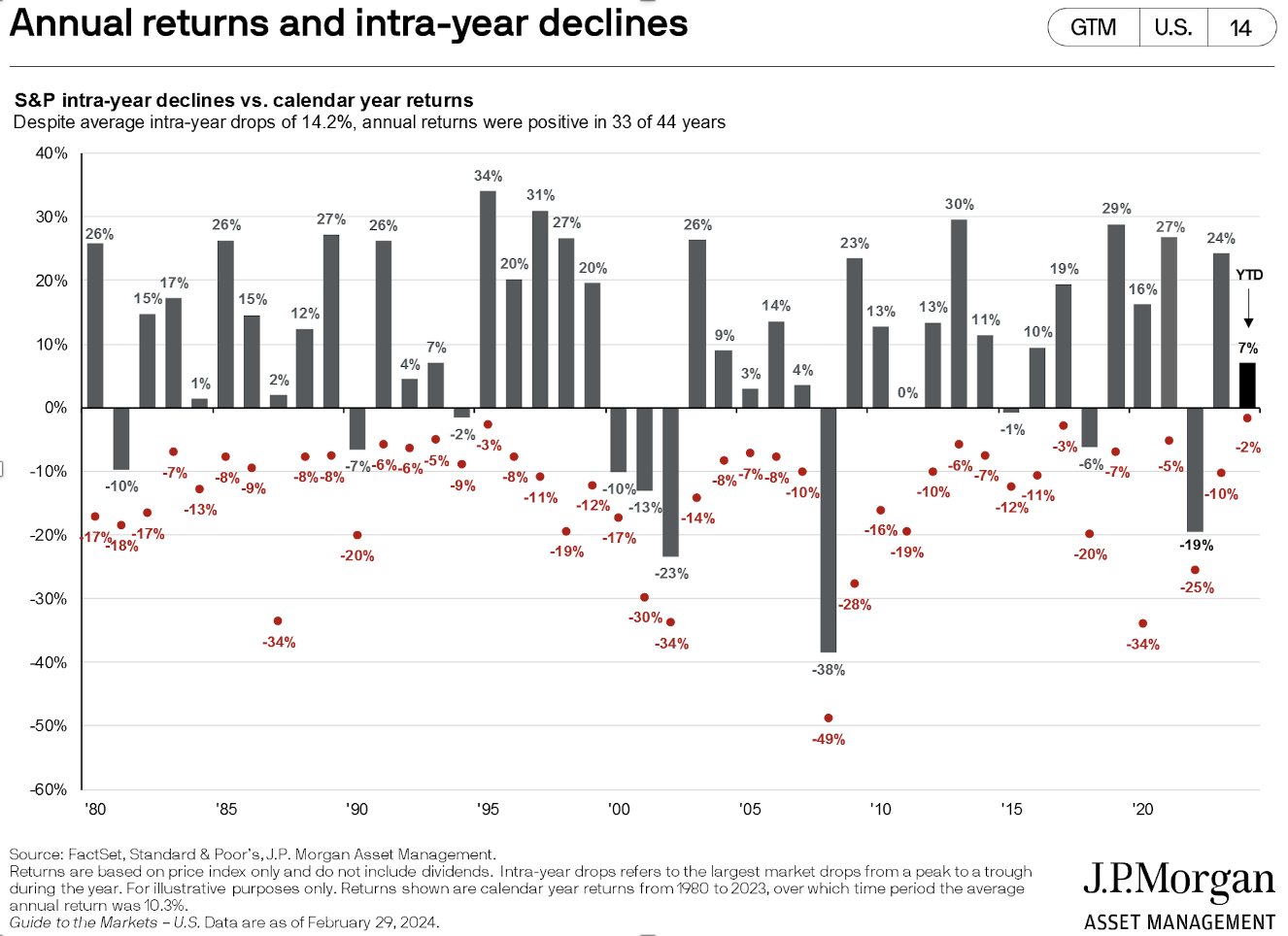
Over the last 30 years we have had lots of all-time highs interspersed with many market corrections. If you had sold to avoid the market going down at a future time, you likely missed out on participating in many all-time highs.
3 Tips to Invest at All-Time Highs
- Understand that losses can be classified as either temporary or permanent. Temporary losses are what we experience with the market. Permanent losses, which is our real concern, most often occurs when investors panic and sell during a temporary loss.
- It is easier to invest at all-time highs when we ignore the noise of headlines, short-term market moves, and forecasts. What happens in the short run is not helpful information for long-term investors.
- Taking the long view is one of the best ways to ensure you participate in any additional all-time highs.
– Jonathan
CRN0000000. The opinions voiced in this material are for general information only and are not intended to provide specific advice or recommendations for any individual. No strategy assures success or protects against loss.